
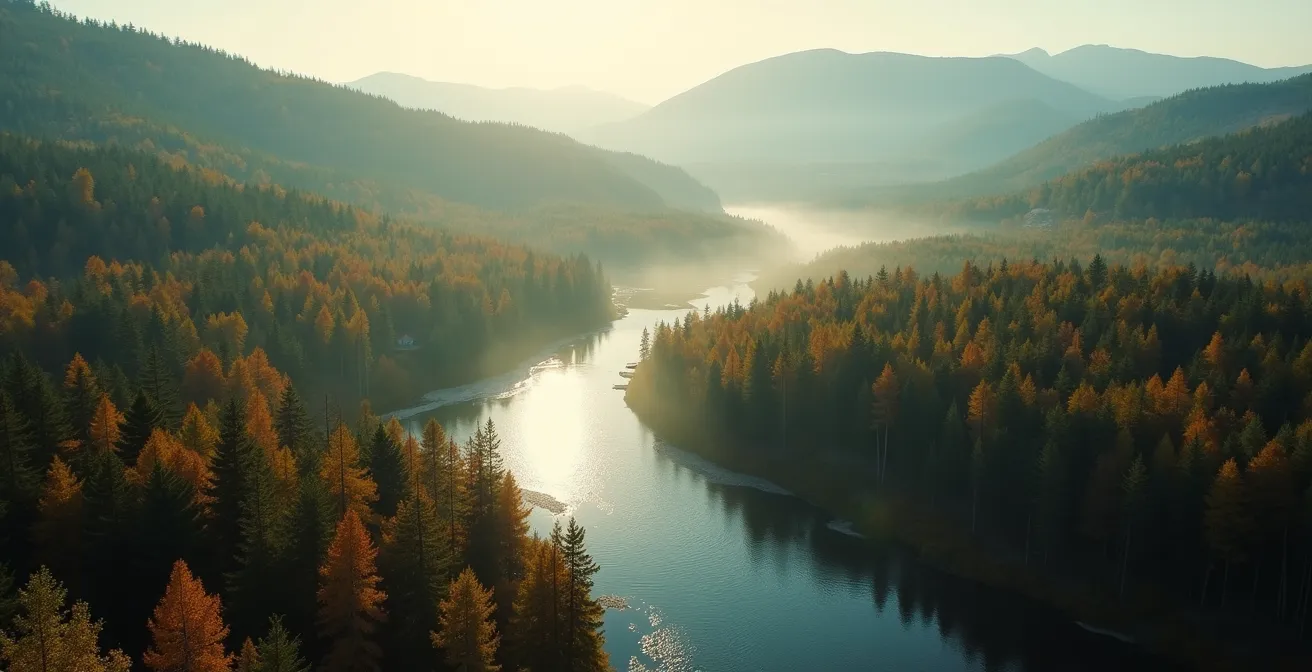
Welcoming half a million people while remaining a wild sanctuary is not a paradox, but the result of active and rigorous management.
- Protection is based on intelligent zoning that separates high-traffic areas from ecological sanctuaries.
- Clear intervention protocols and collaboration with accredited partners ensure a high-quality and safe experience.
- Visitor education and responsibility are the pillars that transform the crowd into an ally for conservation.
Recommendation: To help maintain this balance, explore the lesser-known sectors of the park and always choose certified providers.
As managers of this exceptional territory, the question that drives us every day is not whether we must choose between welcoming the public and protecting nature, but rather how to orchestrate their coexistence. Each year, nearly 500,000 people come seeking an escape in the forests and on the lakes of Parc national du Mont-Tremblant. This influx is a wonderful recognition of the value of this jewel, but it also represents our greatest conservation challenge. Many believe the solution lies in strict rules and bans. That is part of the answer, but it is largely insufficient.
The true key to our success is not found in a simple list of prohibitions posted at the entrance. It lies in a complex and adaptive management system, a constant balancing act that we conduct behind the scenes. This fragile equilibrium rests on meticulous functional zoning, proven intervention protocols, and strategic partnerships with those who share our vision. It is less about erecting barriers than about channeling flows, educating rather than punishing, and making every visitor a partner conscious of their own footprint.
This article opens the doors to our daily management. We will show you how, from the protection of our rivers to the tranquility of our campsites, every decision is designed to maintain this harmony. You will discover why certain areas remain untouched sanctuaries, how we rely on a community of enthusiasts, and how you, as visitors, can become the best guardians of this shared heritage.
To better understand our integrated approach, this article explores the different facets of our conservation strategy, from historical foundations to daily operational challenges. The following summary will guide you through the behind-the-scenes protection of the largest and oldest park in the Quebec network.
Summary: Behind the Scenes of Protecting Quebec’s Largest Park
- Why is this park the senior member of protected areas in Quebec (created in 1895)?
- Diable or Rouge: how are the park’s rivers preserved from tourist pollution?
- Extreme preservation zone: why are certain sectors off-limits to humans?
- How to become a volunteer patroller and contribute to trail maintenance?
- The mistake of bringing a Bluetooth speaker into nature that disturbs wildlife and visitors
- How to get off the beaten path in Mont-Tremblant Park for more peace and quiet?
- Music and parties: how to manage rowdy campers without ruining the family atmosphere?
- How to distinguish an accredited adventure company from an amateur operator?
Why is this park the senior member of protected areas in Quebec (created in 1895)?
The status of senior member of Parc national du Mont-Tremblant is not just an honorary title; it is the foundation of our conservation mission. Created in 1895, the “Montagne Tremblante Park” was born from a vision very different from the one we hold today. Originally, Quebec adopted a “conservationist” approach, allowing logging within the park itself, a practice that lasted until 1981. This history has shaped our landscapes and constantly reminds us of how far we have come.
The true transformation took place at the beginning of the 21st century. It was at this point that the vision shifted radically to align with a “preservation” mission. This legislative evolution was a major turning point, granting us a clear and powerful mandate. As perfectly summarized by Louise Cadieux, a specialist in the park’s history, our role is now to find a point of balance.
In 2001, amendments to the Act strengthened the conservation mission of the Parcs Québec network; they are now recognized as national parks. The park must therefore reconcile preservation and development of its riches in order to welcome visitors.
– Louise Cadieux, Encyclopédie du patrimoine culturel de l’Amérique française
This dual mission is the DNA of our organization. It obliges us to constantly innovate so that the development of the territory for visitors never comes at the expense of its long-term preservation. It is a legacy of over 125 years that guides every action we take, from the smallest intervention on a trail to our major strategic orientations.
Diable or Rouge: how are the park’s rivers preserved from tourist pollution?
Water protection is at the heart of our priorities. With a colossal hydrographic network including some 400 lakes and 6 main rivers, the tourist pressure on our aquatic ecosystems is immense. Every boat, every swimmer is a potential source of disturbance. Our strategy is not limited to monitoring; it consists of actively anticipating and preventing threats, notably the spread of aquatic invasive species (AIS) and non-point source pollution.
To achieve this, we have deployed an arsenal of concrete measures that form a true shield for our lakes and rivers. Far from being mere constraints, these actions are essential management tools that have proven their effectiveness:
- Mandatory washing stations: Before any launch, every watercraft must pass through a washing station. This is our first line of defense to prevent AIS like Eurasian watermilfoil from colonizing our water bodies.
- Ban on gasoline engines: On the vast majority of our lakes, only electric motors are authorized. This measure drastically reduces hydrocarbon pollution and noise disturbance.
- Continuous monitoring: Our teams, in partnership with Quebec university institutions, perform rigorous monitoring of water quality, allowing us to detect any anomaly early on.
- Protection of natural filters: We pay special attention to preserving wetlands (bogs, marshes) which act as sponges and natural filters, purifying water before it reaches major watercourses.
This integrated approach allows us to ensure that the clarity and purity of the waters of the Diable or L’Assomption are not compromised by their popularity. It is a constant task that ensures the sustainability of swimming, fishing, and canoeing for future generations.
Extreme preservation zone: why are certain sectors off-limits to humans?
While much of the park is accessible, we have made the deliberate choice to sanctify certain sectors, designating them as extreme preservation zones. These vast expanses of the backcountry, such as the ancient forest of La Pimbina, are off-limits to all human activity, including hiking. This decision may seem paradoxical for a place intended to welcome the public, but it is absolutely fundamental to our long-term conservation mission.
These zones are not “forgotten lands.” On the contrary, they fulfill several vital ecological and scientific functions. They serve as refuges for species most sensitive to human presence, such as the Eastern wolf or certain forest warblers, offering them intact habitats to reproduce and feed. They are biodiversity reservoirs that help maintain the ecological integrity of the entire park.
The following illustration captures the essence of these sanctuaries: an ancient forest where nature operates unhindered, creating a complexity and resilience that we must protect.
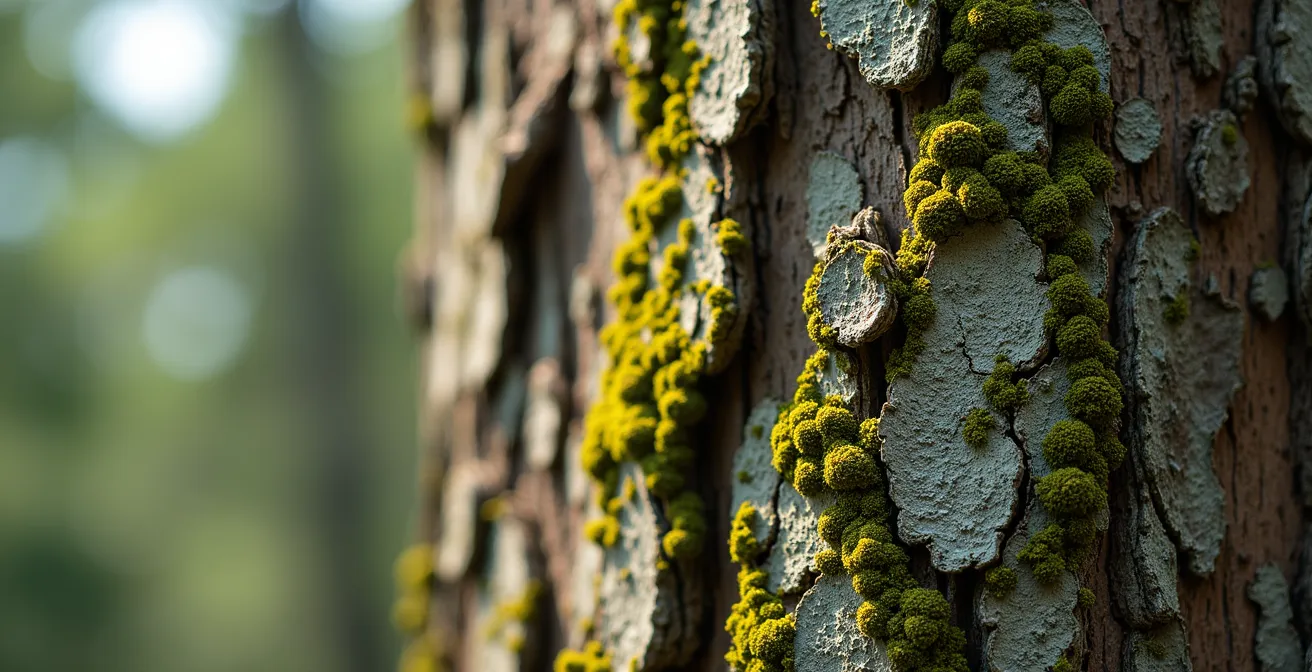
Beyond the role of refuge, these territories are invaluable natural laboratories. As our organization emphasizes, their value for science is immense, as they act as reference points for understanding the world around us.
Quebec’s national parks are special natural laboratories for scientific research because they preserve ecosystems with a high level of ecological integrity. They serve as reference sites for studying rare phenomena or understanding human impacts on unprotected lands.
– Sépaq, Conservation in national parks
By keeping these zones aside, we are not depriving visitors of a part of the park; we are guaranteeing the health and sustainability of the entire ecosystem they come to enjoy. It is an investment for the future, an insurance policy for the wild nature of Mont-Tremblant.
How to become a volunteer patroller and contribute to trail maintenance?
Managing such a vast territory does not rely solely on our salaried teams. We are fortunate to be able to count on a network of passionate volunteers who are true ambassadors and guardians of the park. These patrollers and trail maintainers are essential for maintaining the quality and safety of our network. Across Quebec, it is estimated that Sépaq maintains approximately 1,450 kilometers of trails, a colossal task that would be impossible without the help of these volunteers.
Their role goes far beyond simply using a saw. They are our eyes and ears on the ground, reporting fallen trees, sections damaged by erosion, or safety issues. Their commitment is often a story of passion and dedication, as evidenced by Réal Martel, a volunteer for over a decade.
It’s a Rando Québec saw. I maintain it. I have it year-round because when hikers notify Rando Québec that a passage is obstructed or dangerous, they call me and I come with a team.
– Réal Martel, volunteer
For those who wish to get involved, the best entry point is to contact partner associations like Rando Québec. For those wishing to turn this passion into a career, the seasonal park ranger-patroller position at Sépaq is an excellent path. It is a demanding but incredibly rewarding role that combines physical work, customer service, and direct participation in the conservation mission.
Career Plan: Your path to becoming a seasonal park ranger
- Check prerequisites: Ensure you have a secondary 5 diploma with at least 4 seasons of relevant experience, or a DEP in landscaping with 2 seasons of experience.
- Participate in maintenance: Prepare to perform various tasks on sites, equipment, and trails to ensure their safety and cleanliness.
- Collect data: Get involved in wildlife and plant inventories, a direct contribution to our scientific knowledge of the territory.
- Become an ambassador: Be ready to inform visitors about the park’s riches and best practices for protecting this natural heritage.
- Watch for opportunities: Actively apply during seasonal recruitment periods published on the Sépaq career site to join our ranks.
The mistake of bringing a Bluetooth speaker into nature that disturbs wildlife and visitors
One of the most common challenges in managing a park is reconciling everyone’s expectations regarding their experience. For some, nature is synonymous with silence and peace; for others, it is a backdrop for social activities. The example of the Bluetooth speaker is emblematic of this conflict of use. What many perceive as a simple musical background is actually a major source of disturbance, both for wildlife and other visitors.
Artificial noise has a direct impact on wildlife. It can mask communication signals between animals, warning cries against a predator, or mating calls. The park is home to many bird species particularly sensitive to noise disturbances, such as warblers, whose complex songs are essential for their reproduction. By introducing a foreign sound into their environment, we weaken their ability to survive and thrive.
Beyond the ecological impact, there is the question of respecting others’ experiences. The vast majority of our visitors come seeking the calm and sounds of nature. Imposing one’s music, even at a low volume, breaks this immersion and can ruin the experience for dozens of other people. This is why we apply a strict noise policy. This same logic applies to light pollution, as we remind visitors in our regulations.
The curfew in campsites is not arbitrary. Inappropriate mood lighting such as string lights and unnecessary lighting are prohibited. These requirements aim to protect nocturnal wildlife without compromising camper safety.
– Sépaq, Protecting the night sky at Mont-Tremblant
Bringing a speaker on a hike or to a campsite is therefore a mistake that goes against the very spirit of a national park. We encourage our visitors to disconnect to better reconnect with the essentials: the song of a bird, the whisper of the wind in the leaves, the lapping of the water. It is this authentic soundtrack that we strive to protect.
How to get off the beaten path in Mont-Tremblant Park for more peace and quiet?
With growing popularity, it is true that certain sectors of the park, especially during the peak summer season or autumn weekends, can experience high traffic. However, the immensity of the territory offers many opportunities to find peace. The key is to think beyond the most obvious entry points. Our management strategy aims precisely to promote the entire park to better distribute visitors.
The La Diable sector, with its direct access from Highway 15, is historically the most visited. It is the natural gateway for many, but it is not the only one. For a more peaceful experience, we strongly encourage visitors to explore peripheral sectors. The Pimbina (via Saint-Donat) and L’Assomption (via Saint-Côme) sectors are true hidden gems. Less frequented, they offer equally spectacular landscapes and a much greater sense of isolation.
The image below perfectly illustrates the atmosphere one can find by choosing these alternative routes: a trail to oneself, in the heart of a majestic forest.
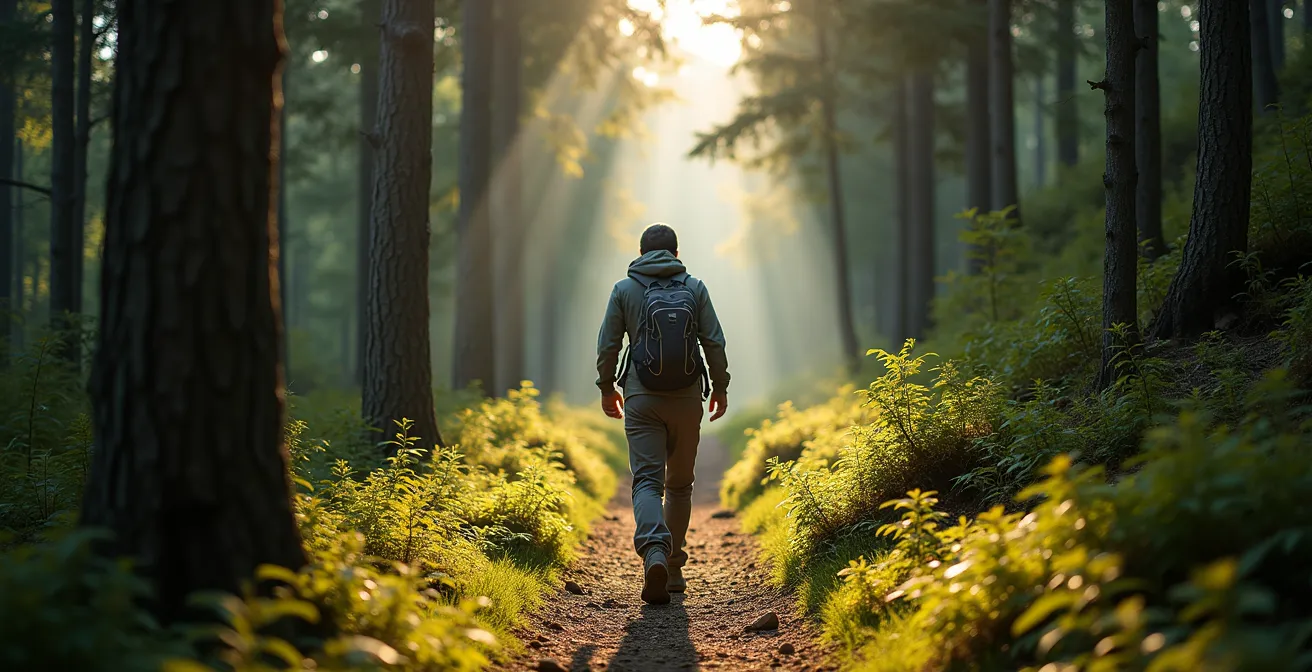
To help you plan your next visit and make an informed choice based on your expectations, we have summarized the characteristics of our three main sectors. This table will allow you to quickly visualize the options available to you for a tailor-made experience.
| Sector | Access | Features | Traffic Level |
|---|---|---|---|
| La Diable | Route 117 from Montreal | Discovery Center, Via Ferrata | High |
| Pimbina-Saint-Donat | Route 125 | Renovated Lac-Provost Campground | Moderate |
| L’Assomption | Saint-Côme | Grandes-Vallées Trail | Low |
Getting off the beaten path also means choosing less busy times. A weekday hike, or a very early morning weekend trip, can radically transform your experience, even in the La Diable sector. By diversifying destinations and schedules, visitors contribute directly to reducing pressure on the most popular sites and actively participate in our conservation effort.
Music and parties: how to manage rowdy campers without ruining the family atmosphere?
Managing noise in camping is a delicate balancing act. Our goal is not to create an austere atmosphere, but to ensure that everyone’s experience is respected. A family atmosphere and the opportunity to recharge in peace are legitimate expectations of the majority of our campers. This is why the management of noisy campers or those organizing “parties” is taken very seriously, but always with a measured approach.
To this end, we have implemented a graduated intervention protocol, which allows our park rangers to act proportionately to the situation. This protocol ensures a fair and consistent application of the regulations across the territory. It is designed to defuse situations before they escalate, while being firm when necessary.
- Courtesy visit: Before the 11 PM curfew, if a group is particularly noisy, our teams make an initial friendly visit to simply remind them of the rules of communal living.
- Formal warning: After 11 PM, if the noise persists, a formal warning is given. At this stage, there is no more ambiguity: the quiet must be respected.
- Statement of offense: In case of non-compliance with the warning, a statement of offense, accompanied by a fine, is issued. This is a clear deterrent measure.
- Expulsion from the park: As a last resort, if the disturbing behavior continues, expulsion can be ordered. This extreme measure is always coordinated with the Sûreté du Québec to ensure everything proceeds safely.
- Anonymous reporting: We encourage disturbed campers to contact the ranger on duty. The report remains anonymous, allowing for intervention without creating conflict between camping neighbors.
This structured approach allows us to preserve the family-friendly and tranquil atmosphere of our campsites. Our commitment to nocturnal quiet goes hand-in-hand with our efforts to protect the starry sky from light pollution, an initiative recognized by international organizations. It is about preserving the nature experience in its entirety, day and night.
To Remember
- Effective protection of the park is not a series of passive rules, but an active management system that constantly arbitrates between access and preservation.
- The zoning strategy, which creates ecological sanctuaries off-limits to access, is fundamental to guaranteeing the health of the entire ecosystem.
- Visitor behavior, from managing noise to choosing a less frequented sector, is the final and decisive link in the conservation chain.
How to distinguish an accredited adventure company from an amateur operator?
Mont-Tremblant National Park is a magnificent playground for a host of activities, from via ferrata to canoe-camping. To oversee these experiences, we work closely with a network of partner companies. Choosing an accredited provider is not just a guarantee of quality; it is a matter of safety and respect for our conservation mission. An amateur or illegal operator not only puts their clients in danger but also risks causing irreversible damage to the environment.
The distinction is simple to make if you know what to look for. A company accredited by Sépaq is always proud of its status and transparent about its qualifications. For example, when you book an activity like via ferrata, you will clearly see the mention of the partner and its certification.
This activity is offered by our partner Parcours Aventures, a member of Aventure Écotourisme Québec (Quality-Safety Certified).
– Sépaq, Park Partner Activities
This “Aventure Écotourisme Québec” (AEQ) certification is a standard of excellence in Quebec. It guarantees that the company complies with strict standards regarding safety, guide training, and environmental practices. Another tangible indicator of seriousness is insurance coverage. To operate in the park, authorized companies must hold general liability insurance of at least 2 million dollars. An amateur operator will never have such coverage.
Beware of offers that seem too good to be true, payments requested only in cash, or guides unable to clearly explain their emergency plan. By systematically choosing a partner recognized by Sépaq and certified by AEQ, you ensure a memorable and safe experience while supporting sustainable ecotourism that contributes positively to the protection of the park.
By choosing accredited partners, respecting the spirit of the place, and adopting the best practices we have detailed, you become much more than a simple visitor. You become an essential and valued actor in our collective conservation mission. Your vigilance and awareness are our best assets for ensuring that Parc national du Mont-Tremblant remains this sanctuary of wild nature for decades to come.
Frequently Asked Questions about Managing Parc national du Mont-Tremblant
How do I verify that a company is AEQ accredited?
Look for the seal of the Aventure Écotourisme Québec association, which guarantees compliance with over 60 safety and quality standards. The provider should display it proudly on their website or documents.
What are the red flags of an illegal operator?
Main warning signals include the absence of a professional website or clear contact information, a request for payment in cash only, and an inability to name or explain specific park regulations.
What question should I ask to test reliability?
A key question is to ask for their emergency plan in case of an accident in an area without cellular network. An accredited company will have a detailed protocol including alternative communication methods (satellite phone, radio) and clear evacuation procedures.