
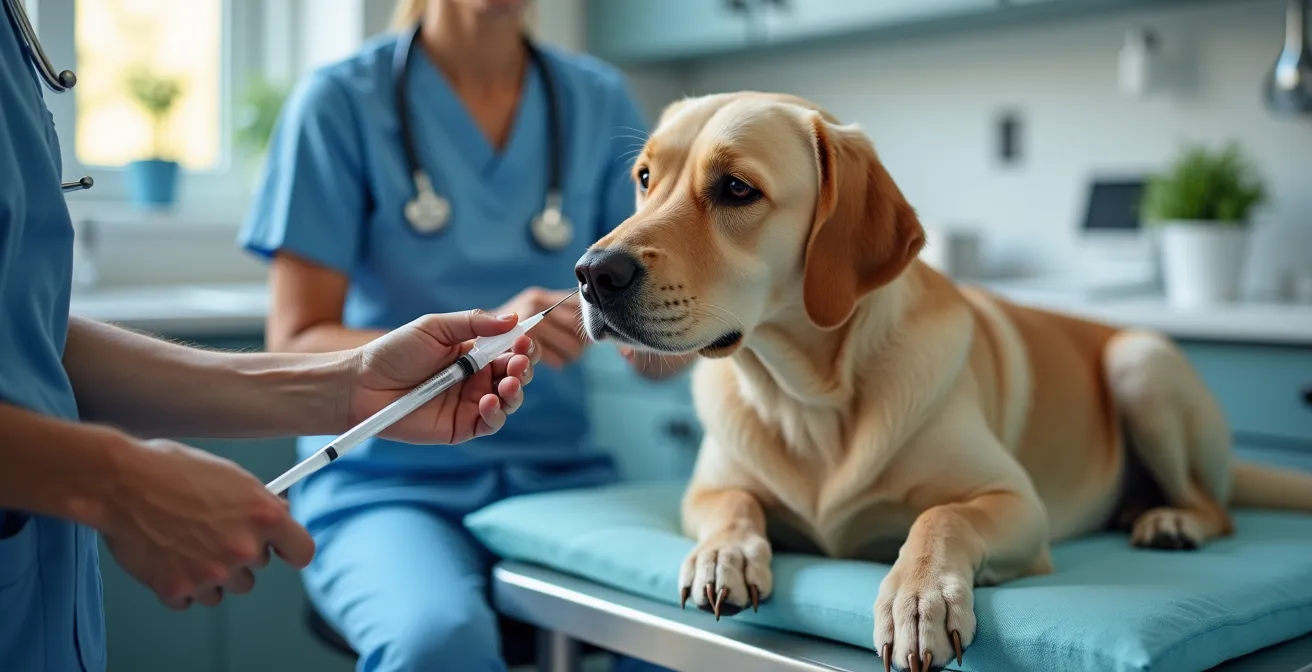
Protecting your dog in Quebec goes far beyond a simple list of vaccines; it requires proactive risk management specific to your local environment.
- Vaccination must be targeted: leptospirosis is crucial near wooded areas, while rabies remains an issue in urban settings due to wildlife.
- Seasonal prevention against ticks and heartworm, from May to November, is a non-negotiable step to avoid serious illnesses such as Lyme disease.
Recommendation: Discuss a personalized health plan with your veterinarian that includes prevention, annual check-ups, and a clear financial strategy for the unexpected.
Welcoming a dog into your life is a source of immense joy, but it comes with great responsibility, especially in Quebec. As an owner, you are quickly faced with a whirlwind of information about your pet’s health: vaccine boosters, antiparasitic treatments, Lyme disease alerts… It’s easy to feel confused and anxious. Most guides simply list “core” vaccines without explaining their concrete relevance to the real risks in our province, whether it’s a walk in the woods in the Eastern Townships or an unexpected encounter with a raccoon in Montreal.
But what if the key wasn’t blindly following a generic calendar, but rather adopting a proactive and targeted risk management approach? The true protection of your companion lies not only in the injections they receive but in your understanding of the threats specific to their lifestyle. By adapting their protection to your Quebec reality, you ensure their long-term health. This article is not just a list of vaccines. It is a strategic guide for you, a dog owner in Quebec, designed by an animal health technician. We will break down local risks, establish a seasonal prevention calendar, address warning signs that should never be ignored, and finally, plan financially for the unexpected. The goal: to give you the tools to make informed and calm decisions for your pet’s well-being.
This article was designed to offer you a clear and structured vision of your dog’s preventive health. To help you easily navigate through the different facets of this essential subject, here is an overview of the topics we will cover together.
Summary: Complete Guide to Preventive Health for Your Dog in Quebec
- Why is the leptospirosis vaccine crucial if you live near a wooded area?
- How to protect your pet from ticks and heartworm from May to November?
- Vomiting or coughing: which symptom requires an immediate visit to the veterinary emergency room?
- The mistake of ignoring bad breath that leads to costly extractions
- Annual blood work: why do it starting at age 7 to detect silent diseases?
- Fox or raccoon: which animal poses the greatest risk of transmitting rabies in the city?
- Pet insurance or personal savings: which financial strategy to choose for the unexpected?
- How much does the first year of adopting a pet in Quebec actually cost?
Why is the leptospirosis vaccine crucial if you live near a wooded area?
Leptospirosis is a bacterial disease that perfectly illustrates the importance of targeted vaccination. Often underestimated, it is transmitted through the urine of infected animals, particularly raccoons, skunks, or rodents. If your dog enjoys walking near stagnant water, forest puddles, or in areas where wildlife is present, the risk is very real. The bacteria enter through mucous membranes or a simple scratch and can cause severe damage to the kidneys and liver, which is sometimes fatal.
What makes this protection even more essential is that leptospirosis is a zoonosis, meaning a disease transmissible from animals to humans. An infected dog can contaminate its environment and, consequently, its family. In fact, a first case of human leptospirosis was diagnosed in Quebec in 2006, where the person was infected by their own dog. This is not a theoretical risk. The trend is rising, and reports indicate that since 2000, the annual number of canine leptospirosis cases has been increasing in Quebec, highlighting the need for increased vigilance.
Vaccination does not always prevent infection 100%, but it considerably reduces the severity of symptoms and the duration during which the dog can shed the bacteria, thus reducing the risk to other animals and humans. In addition, proactive environmental management is recommended:
- Do not let your dog drink from puddles or slow-moving water sources.
- Avoid direct contact with wildlife.
- Control the presence of vermin around your home.
How to protect your pet from ticks and heartworm from May to November?
Protection against external and internal parasites is not an option but a necessity dictated by the Quebec climate. The critical period generally extends from May to November, when temperatures are mild enough for mosquitoes (vectors of heartworm) and ticks (vectors of several diseases, including Lyme disease) to be active. Proactive risk management involves a monthly preventive treatment throughout this season.
Lyme disease, in particular, is a growing concern. As the Clinique Vétérinaire Cheminots points out, ticks can transmit the bacteria responsible after 24 to 48 hours of attachment, causing lameness, fever and, in rare cases, severe kidney damage. The risk is no longer confined to a few isolated areas. Data from the Institut national de santé publique du Québec are clear: in 2023, out of 653 reported cases of Lyme disease, 86% were acquired in Quebec, proving that the threat is local and well-established.
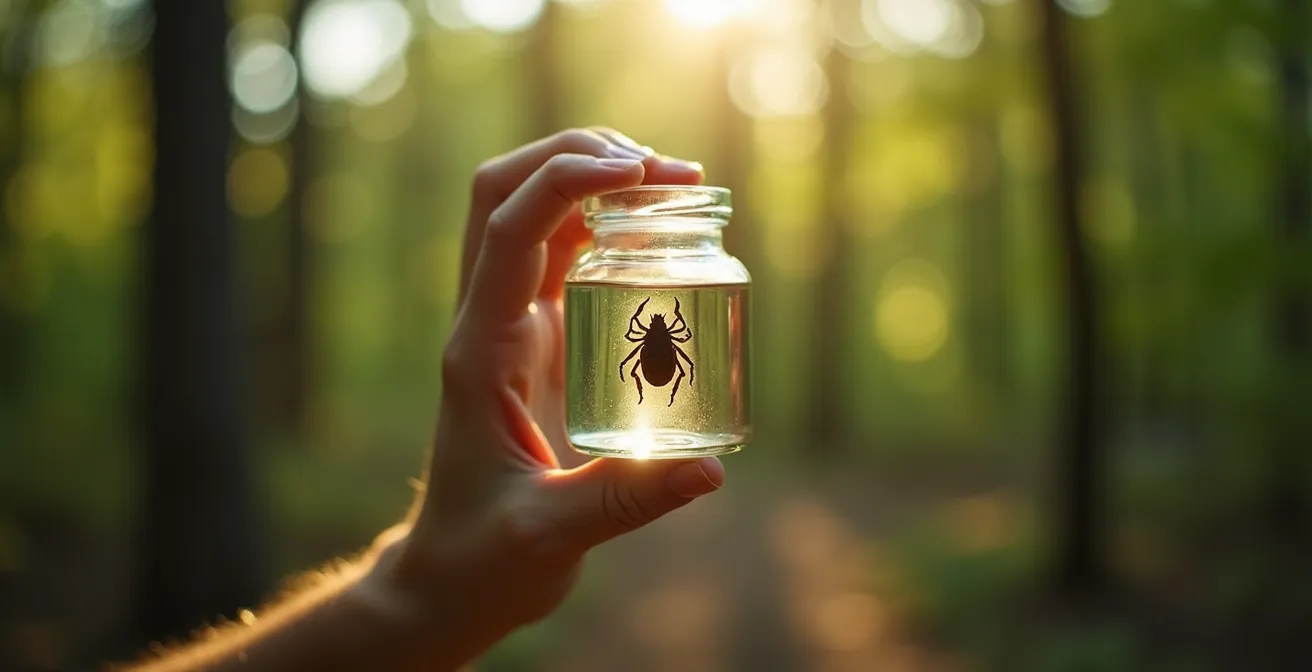
As this image suggests, contact with nature, even on the outskirts of the city, exposes your dog to this risk. Thoroughly inspecting your pet after every outing in nature is an essential habit, but the first line of defense remains an effective preventive treatment prescribed by your veterinarian. Some regions are particularly affected, and it is important to know the level of risk in your area.
The following table, based on surveillance data, identifies the main zones where vigilance must be at its maximum.
| Region | Risk Level | Number of Ticks Collected (2023) |
|---|---|---|
| Eastern Townships (Estrie) | Significant (endemic) | Decreasing data |
| Montérégie | Significant (endemic) | Decreasing data |
| Outaouais | Significant (endemic) | Decreasing data |
| Mauricie-Centre-du-Québec | Present to Significant | Decreasing data |
Even if collection data shows a decrease in some endemic zones, this often reflects better awareness rather than the disappearance of the risk. Prevention therefore remains the cornerstone of protection.
Vomiting or coughing: which symptom requires an immediate visit to the veterinary emergency room?
As an owner, it is sometimes difficult to distinguish a temporary discomfort from a true medical emergency. A dog that vomits once after eating too fast is generally not a major cause for concern. On the other hand, repeated vomiting, accompanied by lethargy, loss of appetite, or signs of dehydration, should alert you immediately. The key is to observe your pet’s overall behavior. A dog that remains playful and alert despite an isolated symptom is less concerning than an animal that is suddenly despondent and prostrate.
Similarly, an occasional cough can be harmless. However, a persistent, hoarse cough accompanied by breathing difficulties, wheezing, or exercise intolerance may indicate a serious problem such as pneumonia, a heart condition, or “kennel cough” (infectious tracheobronchitis). Vaccination helps prevent some of these causes, such as the Canine Distemper virus, which can lead to respiratory or digestive problems with fatal consequences.
It is crucial to learn to recognize signals that cannot wait. When in doubt, it is always better to call your veterinary clinic or an emergency center. Here is a non-exhaustive list of symptoms that justify an immediate consultation:
- Breathing difficulties (rapid, shallow breathing, bluish tongue).
- Severe and repeated vomiting or diarrhea, especially if blood is present.
- Neurological symptoms: seizures, disorientation, loss of balance, uncontrollable tremors.
- Sudden abdominal distension: the abdomen is hard and swollen, which can be a sign of gastric torsion (bloat).
- Inability to urinate or obvious pain during urination.
- Suspected ingestion of a toxic product (chocolate, antifreeze, human medication, certain plants).
- Obvious trauma (road accident, fall, serious bite).
The mistake of ignoring bad breath that leads to costly extractions
One of the most common mistakes among dog owners is considering bad breath (halitosis) as an inevitability related to age. In reality, it is very often the first sign of periodontal disease. This problem begins insidiously with the accumulation of dental plaque, which mineralizes into tartar. Tartar irritates the gums (gingivitis) and, if left untreated, allows bacteria to seep under the gumline, destroying the tooth’s support tissues and the jawbone.
Ignoring this symptom means allowing the disease to progress silently. Beyond the pain it causes the animal, the consequences are serious: infections, abscesses, and eventually, loosening and loss of teeth. Dental scaling procedures under general anesthesia are already a cost, but when multiple dental extractions are required, the bill can quickly climb by several hundreds or even thousands of dollars. These fees add to an already substantial budget.

Prevention is by far the most effective and least expensive strategy. It rests on two pillars: home care (regular brushing with a suitable toothpaste) and an annual dental exam by your veterinarian. This exam allows for the detection of problems at an early stage and the planning of a cleaning before irreversible damage occurs. Considering dental health as a priority is a direct investment in your companion’s comfort and longevity.
Annual blood work: why do it starting at age 7 to detect silent diseases?
Starting at age 7, a dog enters the “senior” category, even if they are still bursting with energy. It is at this age that the annual health check-up should systematically include blood analysis. Many owners question the relevance of this test if their pet seems to be in perfect health. The answer lies in the concept of predictive health: detecting problems before they manifest through obvious symptoms.
A blood panel is a true window into your pet’s internal functioning. It allows for the evaluation of the function of vital organs that often do not show signs of failure until the disease is already very advanced. For example, chronic kidney disease can destroy up to 75% of the kidneys before the first symptoms (increased thirst, weight loss) appear. A blood test can reveal an increase in kidney markers (urea, creatinine) long before this critical stage, allowing for measures (dietary changes, medication) to slow the progression of the disease and improve quality of life.
Similarly, blood work is essential for screening other common “silent diseases” in aging dogs:
- Liver diseases: An increase in liver enzymes can signal inflammation or early damage.
- Diabetes: A high glucose level is the main indicator of this disease, which is managed much better when caught early.
- Thyroid disorders: Hypothyroidism, common in certain breeds, can be easily detected and treated.
- Anemia and infections: A Complete Blood Count (CBC) provides valuable information about red blood cells, white blood cells, and platelets.
By performing annual blood work starting at age 7, you establish a “baseline value” for your dog. From year to year, your veterinarian will be able to spot subtle but significant changes, acting as a true early warning system. It is a minimal investment compared to late diagnoses and the heavy treatments it helps avoid.
Fox or raccoon: which animal poses the greatest risk of transmitting rabies in the city?
The question is not so much about which is “more” dangerous, but about understanding that both represent a real risk, even in urban environments. In Quebec, wildlife has adapted remarkably well to our cities. Foxes, raccoons, skunks, and even bats are frequent neighbors. Yet, these are precisely the main vectors of rabies in the province.
Rabies is a viral disease that attacks the nervous system and is 100% fatal once symptoms appear. It is transmitted through the saliva of an infected animal, most often via a bite. Even though canine rabies cases are rare in Quebec thanks to effective vaccination, zero risk does not exist. An unvaccinated dog that fights with a raccoon in the backyard or finds a sick bat on the ground is directly exposed.
Rabies is a fatal disease, transmissible to humans, transmitted by the saliva of infected animals. Although it is rare, zero risk does not exist, especially in the presence of bats or wild or stray animals.
– Clinique Vétérinaire Cheminots, Canine Vaccination Guide
This reality makes the rabies vaccine a non-negotiable pillar of your dog’s protection, but also of public health. By vaccinating your pet, you create a barrier that protects them, your family, and the community. In Canada, wild animals that carry rabies include skunks, raccoons, bats, and foxes, and urban cohabitation makes vigilance indispensable. Rabies vaccination is actually required by law in many Quebec municipalities for this very reason.
Pet insurance or personal savings: which financial strategy to choose for the unexpected?
Facing a veterinary emergency or a chronic illness can represent a considerable financial burden. The average annual cost for a dog in Quebec, including food, preventive care, and other expenses, is estimated at approximately $3,020. This amount does not include accidents or serious illnesses. Preparing for these unexpected events is an essential part of responsible pet ownership. Two main strategies are available to you: pet insurance or a personal emergency fund.
Pet insurance works on the principle of a monthly premium in exchange for coverage (partial or total) of unexpected veterinary costs. Its main advantage is peace of mind: in the event of a bill for several thousand dollars, you know you won’t have to make a difficult choice between your pet’s health and your finances. However, premiums vary, policies have exclusions and deductibles, and preventive care is not always covered.
Personal savings, on the other hand, consists of setting aside a sum each month in an account dedicated to your pet’s care. This method offers total flexibility: the money is yours and can be used for any type of care. The main disadvantage is the risk: a major emergency occurring early in the pet’s life could far exceed the amount you have had time to accumulate.
The Quebec market offers several insurance options, each with its own characteristics. The following table, based on a recent comparative analysis, gives an overview of the main players.
| Insurer | Monthly Premium Dog | Monthly Premium Cat | Features |
|---|---|---|---|
| Desjardins | $37 to $136 | $26 to $87 | Various plans according to needs |
| CAA-Quebec | $63 (average) | $39 (average) | Distributes Pet Plus Us |
| Trupanion | Variable | Variable | Direct payment at the veterinarian |
The best choice depends on your risk tolerance and financial situation. A hybrid approach can also be considered: taking out insurance for “catastrophes” (accidents, surgeries) and maintaining a small emergency fund for uncovered costs and the deductible.
Key Takeaways
- Vaccination must be personalized based on local Quebec risks (leptospirosis, urban rabies) and your dog’s lifestyle.
- Seasonal protection (May-November) against ticks and heartworm is non-negotiable to prevent serious diseases like Lyme.
- Financial anticipation, whether through insurance or dedicated savings, is an essential component of dealing with the unexpected costs of veterinary care.
How much does the first year of adopting a pet in Quebec actually cost?
The first year with a puppy is often the most expensive. Beyond the adoption price, you must budget for a series of essential veterinary costs to start off on the right foot. These initial costs are a direct investment in your companion’s long-term health. The initial vaccination protocol, for example, is crucial. It includes a series of injections at 2, 3, and 4 months to build solid immunity against serious diseases like distemper, parvovirus, and infectious canine hepatitis.
According to available data, the cost of basic vaccines and the annual exam generally ranges between $70 and $140 per visit, and several visits are necessary in the first year. Added to this are other unavoidable costs. An analysis conducted by Protégez-Vous estimates the veterinary care budget at over $900 for a puppy’s first year of life, not including food and accessories. This amount covers a set of fundamental preventive procedures.
To help you plan, it is useful to break down these expenses. The following list details typical first-year veterinary expenses, allowing you to create a realistic budget and avoid surprises.
Your budgetary action plan for the first year: points to check
- Veterinary consultations: Plan at least 3 to 4 visits for puppy follow-up, health exams, and injections.
- Vaccination protocol: Budget for the full series of core vaccines and discuss recommended vaccines (leptospirosis, kennel cough) based on your lifestyle.
- Antiparasitic treatments: Include the cost of the initial dewormer and monthly treatment against fleas, ticks, and heartworm for the summer season.
- Spaying/Neutering: Find out the cost of sterilization (surgery), which usually takes place around 6 months of age.
- Microchipping: Plan for the installation of an identification microchip, a crucial step for your pet’s safety.
By properly planning the vaccination schedule, seasonal prevention, and associated budget, you give your companion the best possible start. To make this approach a reality, the next logical step is to consult a professional to establish a tailor-made health plan, perfectly adapted to your pet and your Quebec reality.
Frequently Asked Questions about Vaccination and Preventive Care for Dogs in Quebec
How often should vaccine boosters be done?
After the puppy protocol ends with the 4-month vaccine, a booster is needed at 1 year. Afterward, the frequency of boosters varies by vaccine: some are annual, while others can be administered every 3 years. Your veterinarian will establish the optimal schedule for your dog.
Why vaccinate even an indoor dog?
Even a dog that rarely goes out is exposed to risks. Viruses and bacteria can be brought home on your shoes or clothing. Furthermore, daily outings for bathroom breaks, even short ones, are enough to contract diseases through contact with the environment or other animals.
What are the signs of a vaccine reaction?
Mild and temporary reactions (lethargy, slight fever, sensitivity at the injection site) are possible. However, be vigilant. More serious signs such as facial swelling, hives, vomiting, or breathing difficulties require contacting your veterinarian immediately. It is advisable to stay near your pet in the hours following vaccination.